Back to all tests
5Mixed (Text + Image)
Test Series 5
10 high-yield NEET PG-style MCQs with detailed explanations, mixing image-based and text-based questions.
1
Neurology
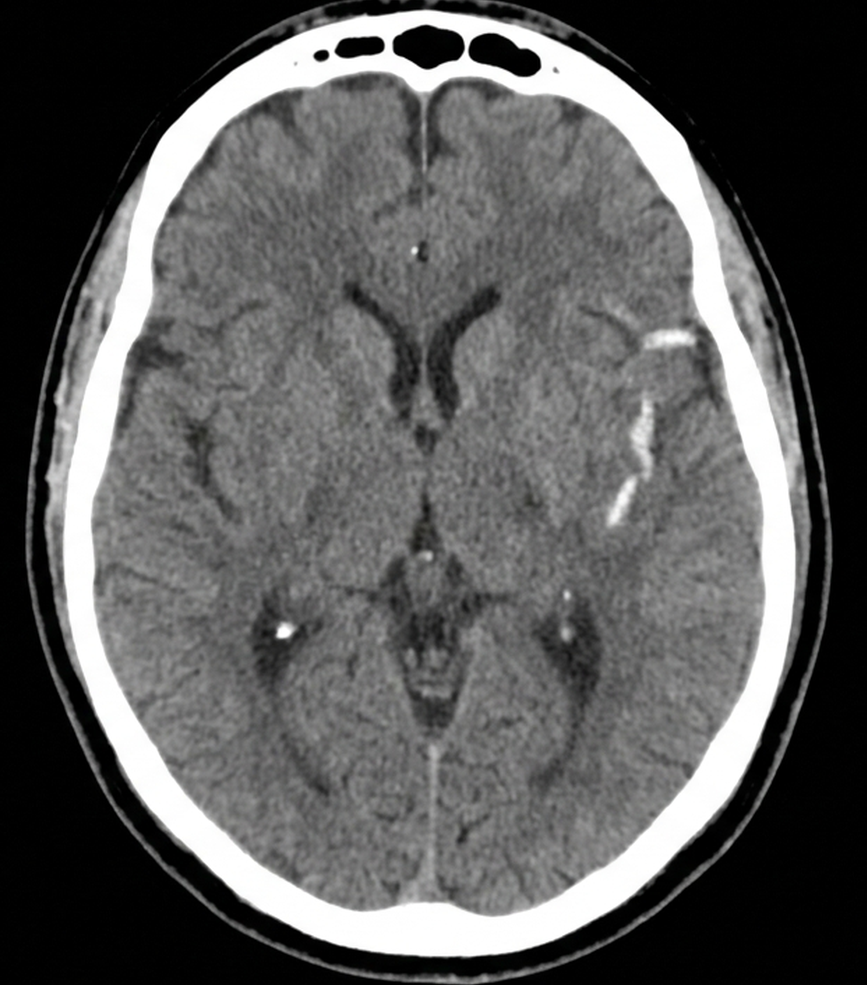
A patient presents with right-sided weakness and aphasia, with an irregularly irregular pulse for 2 hours. The non-contrast CT head is shown. Next best step?
2
Cardiology
A patient’s rhythm strip is reviewed. The 12-lead ECG is shown. Which drug is NOT used in management?

3
Nephrology
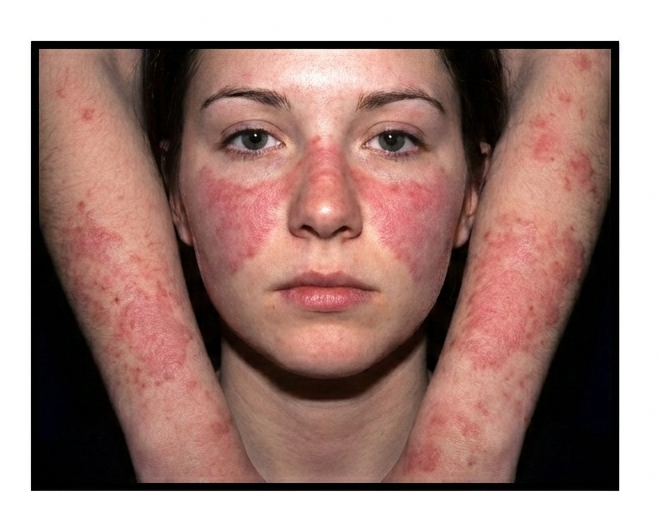
A young woman presents with arthralgia and dyspnoea. The clinical photograph is shown. Most useful antibody?
4
Hematology(INI-CET 2022)
The clinical detection of cyanosis is highly dependent on the absolute concentration of deoxygenated hemoglobin in the capillary beds. In which of the following patients is central cyanosis most likely to become clinically visible at the highest (mildest) level of arterial oxygen desaturation?
5
Endocrinology
A 16-year-old boy is referred to an endocrinologist for evaluation of asymptomatic fasting hyperglycemia incidentally discovered during a routine sports physical. His body mass index is 20 kg/m2, and laboratory testing reveals a complete absence of classic islet cell autoantibodies. A detailed family history reveals that his mother, maternal grandfather, and a maternal aunt were all diagnosed with diabetes before the age of 25. Which of the following genetic inheritance patterns most reliably distinguishes this patient's likely diagnosis from typical Type 1 and Type 2 diabetes?
6
Hepatology(INI-CET 2022)
A 65-year-old patient with a history of rheumatoid arthritis and chronic bronchiectasis presents with nephrotic syndrome. A percutaneous renal biopsy is performed. Which of the following specific stains and optical techniques is required to definitively diagnose the suspected secondary renal pathology?
7
Gastroenterology
A 45-year-old man presents with progressive bilateral lower extremity edema and chronic foul-smelling diarrhea. Laboratory investigations reveal marked hypoproteinemia and a relative lymphopenia, specifically demonstrating a depletion of CD3+ T cells. Upper endoscopy with a small-intestinal biopsy is performed, revealing clubbed villi accompanied by dramatically dilated lymphatic channels localized in the submucosa and extending into the lamina propria. Which of the following dietary interventions is the most appropriate management for this patient's underlying condition?
8
Pulmonology
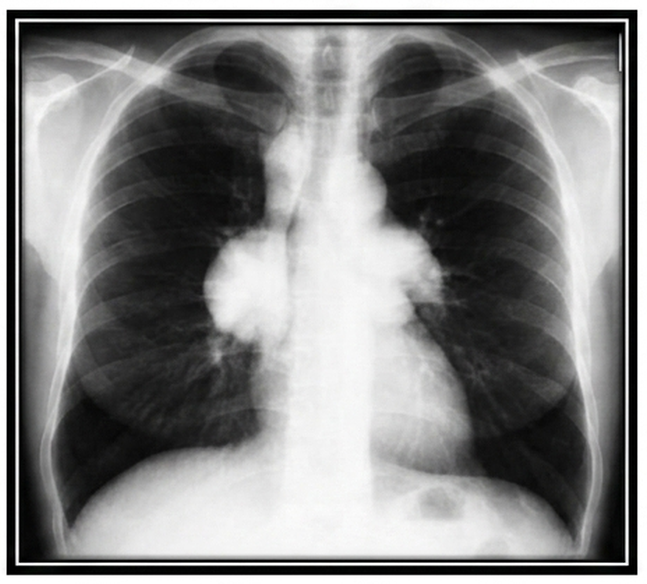
A patient presents with a history of fever, night sweats, and newly developed bilateral facial nerve palsy. A complete blood count reveals leukocytosis. The PA chest X-ray is shown. Which is the most likely diagnosis?
9
General Medicine(INI-CET 2023)
A 17-year-old phenotypic female presents for the evaluation of primary amenorrhea. Physical examination shows normal breast development but completely absent axillary and pubic hair. Pelvic ultrasound reveals a blind-ending vaginal pouch and an absent uterus. A karyotype is performed and returns as 46,XY. What is the primary pathophysiological mechanism underlying her condition?
10
Rheumatology
A 72-year-old woman of Scandinavian descent presents with a new-onset, severe right-sided headache, jaw pain while chewing her meals, and profound fatigue. Her erythrocyte sedimentation rate is significantly elevated. The physician immediately initiates high-dose oral prednisone therapy prior to obtaining a temporal artery biopsy. The overarching goal of prompt medical therapy in this specific disease is most importantly targeted at preventing which of the following primary ischemic complications?
0 of 10 answered
Answer all 10 questions to submit